

In a few days, I’ll leave for Nepal to take on the biggest mountain challenge I’ve attempted so far.
Mt Himlung. 7,126 metres. I’ve been saying those numbers for months. They’ve appeared in presentations, conversations, training plans, emails and probably more spreadsheets than I ever want to see again. But something changes when departure gets close.
7,126 metres stops being a number.
It becomes somewhere you’re actually going. And I’ve realised that preparing for Himlung has taught me something important.The mountain starts asking questions of you long before you ever put a boot on it.
Preparing for Himlung isn’t just about getting fitter
The obvious part of expedition preparation is training. You need to be physically capable of doing the work. I’ve spent hours walking, climbing and testing myself and my equipment. But fitness is only one part of this.
- There are batteries to think about.
- Equipment.
- Clothing.
- Power.
- Charging.
- Travel.
- Insurance.
- Medication.
- Documents.
- Communication.
- Contingency plans.
And in my case, there’s another fairly significant consideration.
My legs need electricity.
I’ll be heading onto Himlung using my Agilik powered orthoses, developed by Bionic Power and supplied in partnership with Thuasne. That creates questions I’ve never had to answer on a mountain before.
- How will the technology behave as we gain altitude?
- What happens to battery performance as temperatures fall?
- How much assistance will I need?
- How will my body respond to using them day after day?
- What happens when I’m tired?
There are things we’ve been able to test.
There are others we simply won’t know until we’re there.
You prepare for the things you can control
I’ve written before that preparation isn’t the same as confidence. For me, it’s about reducing the number of surprises.
- I can’t control the weather on Himlung.
- I can’t control the mountain.
- I can’t guarantee how my body will respond to altitude.
- I can’t guarantee that every piece of equipment will behave exactly as expected.
- And I certainly can’t guarantee an outcome.
But I can control what I do before I leave.
- I can train.
- I can test equipment.
- I can ask questions.
- I can listen to people who know more than I do.
- I can check the kit.
- Then check it again.
Preparation doesn’t remove uncertainty.
It gives you more capacity to deal with uncertainty when it arrives.
7,126 metres asks something of the whole team
There’s another thing that’s become increasingly obvious as Himlung has got closer. I couldn’t do this alone. And I’m not talking about some inspirational idea of teamwork. I mean that very practically.
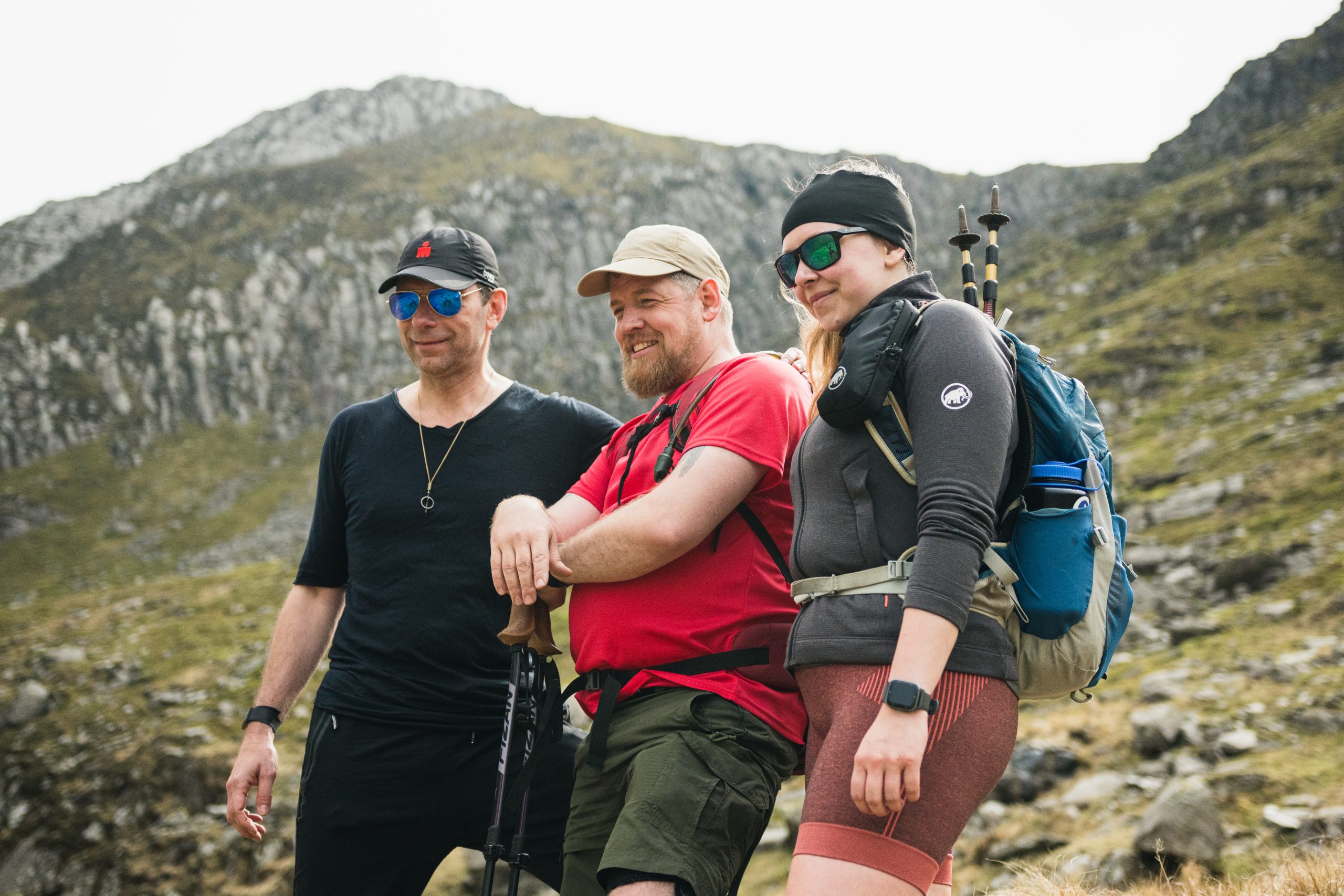
Emma Forrest and Deri ap John Llewellyn-Davies will be climbing alongside me.
We have people helping with training, logistics, finances, filming and equipment. In Nepal we’ll be working with Nima Sherpa and the SKA team.
Then there are the partners and sponsors who have helped put equipment, expertise, funding and support behind the project. Eventually three of us will be the people physically moving up the mountain.
But getting those three people there has taken a much bigger team.
That’s probably one of the biggest lessons before we’ve even left.
The technology is part of the expedition, not the whole story
There’s understandably a lot of interest in the Agiliks. I understand why.
Powered orthoses and a 7,126-metre Himalayan mountain make an interesting combination.
And I’m fascinated to discover what they’re capable of too. But Project Can’t isn’t a technology demonstration. The technology is one part of a much bigger system.
- There’s me.
- There’s the equipment.
- There’s the terrain.
- There’s altitude.
- There’s the team.
- There’s our guides.
- There’s judgement.
And all of those things have to work together. If something doesn’t work, that’s useful information. If we need to change the plan, that’s useful information. If we discover something we hadn’t anticipated, that’s useful information too.
Himlung is as much about learning as climbing.
Success can’t only exist at 7,126 metres
This is probably the most important thing I’m taking with me. Of course I’d love to reach the summit. I’m not going to pretend otherwise. You don’t spend months preparing for a mountain without wanting to stand on top of it. But I don’t want the entire expedition reduced to one question:
“Did you summit?”
There are too many variables involved for that to be the only definition of success.
- What did we learn?
- How did my body respond?
- How did the technology perform?
- How did we operate as a team?
- What worked?
- What didn’t?
- What would we change?
- What did Himlung teach us that we need to know before attempting something bigger?
Those answers matter.
Because Himlung isn’t intended to be the end of Project Can’t.
It’s where we start collecting evidence.
The strange bit before leaving
Right now, I’m in that strange period before an expedition where most of the work has been done but none of the answers have arrived yet.
The training has happened. The equipment has been tested as far as we can test it here. Plans have been made. Bags are beginning to fill.
And now the temptation is to keep asking: “Am I ready?”
I’m not sure anyone ever feels completely ready for something they’ve never done before. Maybe that’s the wrong question.
A better one might be: “Have I done what I reasonably can to be ready for what comes next?”
I think I have.
So have Emma and Deri.
And soon the planning ends. We’ll get on a plane. We’ll travel to Nepal. And eventually we’ll stand at the bottom of a 7,126-metre mountain and start getting some answers.
Whatever happens from there, I want to document it properly. Not just the good bits. Not just the photographs. And definitely not just the outcome.
Because Project Can’t has never been about proving that everybody can do everything. It’s about being willing to question the assumptions that tell us something can’t be done before we’ve properly explored whether it can.
Very soon, it’s time to explore.
Follow Project Can’t across our social channels for updates as the Himlung expedition gets underway.